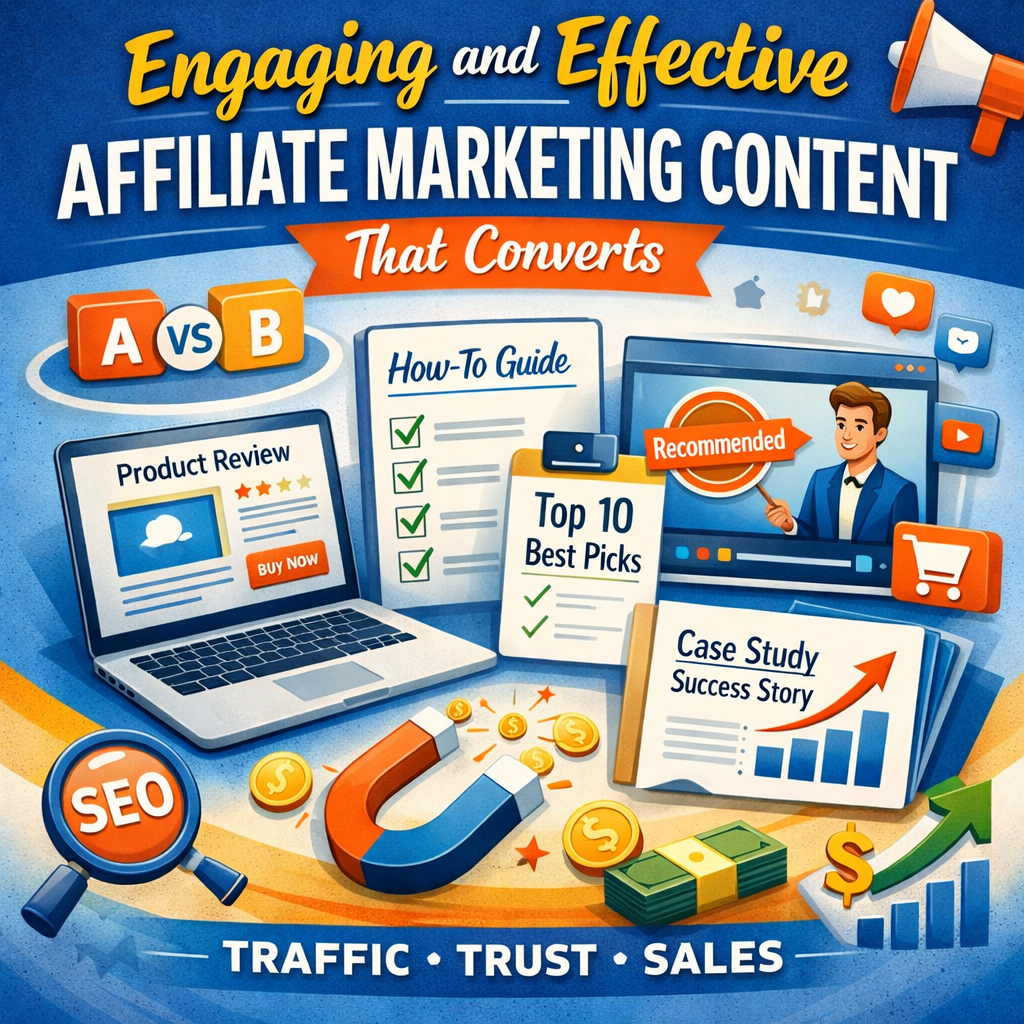
Examples of Engaging and Effective Affiliate Marketing Content
Affiliate marketing has become one of the most powerful and scalable ways to earn income online. However, success in affiliate marketing does not come from simply placing links everywhere. The key lies in creating high-quality, engaging, and effective affiliate content that builds trust, solves problems, and naturally guides readers toward making a purchase.
In this article, we will explore examples of affiliate marketing content that works, why they are effective, and how you can apply these strategies to your own website, blog, or social media platforms.
What Is Affiliate Marketing Content?
Affiliate marketing content refers to any type of digital content—articles, videos, emails, or social posts—that promotes a product or service through an affiliate link. When readers click the link and complete a purchase, the content creator earns a commission.
Effective affiliate content does not feel like advertising. Instead, it focuses on value, authenticity, and relevance, making the recommendation feel natural and helpful.
Why Content Quality Matters in Affiliate Marketing
Search engines and users are becoming increasingly selective. Thin, spammy content no longer ranks well, and audiences are quick to lose trust if they feel misled.
High-quality affiliate content helps you:
- Build long-term trust with your audience
- Improve SEO rankings and organic traffic
- Increase conversion rates
- Establish authority in your niche
- Comply with search engine guidelines and disclosure regulations
The most successful affiliate marketers focus on helping first, selling second.
Example 1: Product Review Articles
What It Is
A product review article is one of the most common and effective forms of affiliate content. It provides an in-depth evaluation of a product based on real use, research, or testing.
Why It Works
People actively searching for reviews are already close to making a buying decision. A well-written review can influence that decision.
Key Elements of an Effective Product Review
- Clear introduction explaining who the product is for
- Honest pros and cons
- Real-life use cases or scenarios
- Comparison with alternatives
- High-quality images or screenshots
- Clear call-to-action (CTA)
Example Topics
- “Honest Review of [Product Name]: Is It Worth the Money in 2025?”
- “My 30-Day Experience Using [Software Name]”
SEO Tip: Target keywords like product review, honest review, and is it worth it.
Example 2: Comparison Posts
What It Is
Comparison content evaluates two or more products side by side, helping readers decide which option best suits their needs.
Why It Works
Comparison posts reduce decision fatigue and position you as a helpful guide rather than a salesperson.
Effective Comparison Content Includes
- Feature comparison tables
- Pricing differences
- Performance analysis
- Pros and cons of each option
- Clear recommendation for different user types
Example Titles
- “[Product A] vs [Product B]: Which One Is Better for Beginners?”
- “Top 5 Email Marketing Tools Compared (Pros, Cons, and Pricing)”
SEO Tip: Use keywords like vs, comparison, best alternative, and which is better.
Example 3: How-To Guides with Affiliate Links
What It Is
A how-to guide teaches readers how to solve a specific problem while naturally integrating affiliate products as tools or solutions.
Why It Works
Educational content builds trust and positions your affiliate links as part of the solution rather than a sales pitch.
Example Topics
- “How to Start a Blog in 2025 (Step-by-Step Guide)”
- “How to Build an Email List Using [Affiliate Tool]”
Best Practices
- Focus on actionable steps
- Include screenshots or examples
- Recommend products only when relevant
- Explain why you recommend each tool
SEO Tip: Optimize for long-tail keywords like how to, step-by-step, and beginner guide.
Example 4: Listicles and “Best Of” Content
What It Is
List-based articles highlight multiple products or services in a ranked or categorized format.
Why It Works
Listicles are easy to read, scannable, and highly clickable. They perform exceptionally well in search results.
Example Titles
- “10 Best Affiliate Marketing Tools for Beginners”
- “7 Best Web Hosting Services for Small Businesses”
What Makes Them Effective
- Clear criteria for ranking
- Short but informative descriptions
- Honest recommendations
- Visual separation between items
SEO Tip: Use keywords like best, top, recommended, and for beginners.
Example 5: Case Studies and Personal Experience Content
What It Is
Case studies share real results, data, or personal experiences using a product or service.
Why It Works
Authenticity is powerful. Readers trust real stories more than generic marketing claims.
Example Topics
- “How I Increased My Website Traffic by 300% Using [Tool Name]”
- “Case Study: Earning $1,000/Month with Affiliate Marketing”
Key Elements
- Clear starting point
- Step-by-step process
- Measurable results
- Lessons learned
- Transparency about failures and limitations
SEO Tip: Use storytelling keywords like case study, results, and my experience.
Example 6: Email Marketing Affiliate Content
What It Is
Affiliate promotions sent via email newsletters, often combined with educational or value-driven content.
Why It Works
Email subscribers already trust you, making them more likely to convert.
Effective Email Affiliate Strategies
- Educational email sequences
- Product launch announcements
- Personal recommendations
- Exclusive bonuses or discounts
Best Practices
- Avoid excessive promotion
- Be transparent about affiliate links
- Focus on problem-solving
SEO Tip: While emails don’t rank, they support your overall affiliate funnel and conversions.
Example 7: Video Affiliate Content
What It Is
Affiliate marketing through platforms like YouTube, TikTok, or Instagram Reels.
Why It Works
Video builds trust faster than text and allows demonstrations in real time.
Popular Video Formats
- Product reviews
- Tutorials and walkthroughs
- “Day in the life” content
- Unboxing videos
Optimization Tips
- Include affiliate links in descriptions
- Use keyword-rich titles
- Add timestamps for better UX
SEO Tip: YouTube is the second-largest search engine—optimize accordingly.
Example 8: Social Media Affiliate Content
What It Is
Affiliate promotions shared through social platforms such as Instagram, Twitter, Facebook, or LinkedIn.
Why It Works
Social proof and relatability increase engagement and click-through rates.
Effective Social Content Ideas
- Short tips with product mentions
- Before-and-after results
- Testimonials
- Polls and Q&A sessions
Best Practice: Always disclose affiliate relationships clearly.
How to Make Affiliate Content More Effective
To maximize results, apply these universal principles:
Focus on the Audience
Understand their pain points, goals, and objections.
Be Honest and Transparent
Never oversell or hide drawbacks.
Optimize for SEO
Use keywords naturally, optimize headings, and improve page speed.
Add Clear CTAs
Guide readers on what to do next without being pushy.
Update Content Regularly
Keep information accurate and relevant.
Common Mistakes to Avoid in Affiliate Content
- Writing purely promotional content
- Ignoring SEO fundamentals
- Promoting irrelevant products
- Lacking disclosures
- Copying competitors’ content
Avoiding these mistakes will help you build a sustainable affiliate marketing business.
Final Thoughts
Creating engaging and effective affiliate marketing content is not about manipulation—it’s about helping people make better decisions. By focusing on value, authenticity, and strategic SEO, you can build trust, grow organic traffic, and increase affiliate revenue over time.
Whether you choose product reviews, comparisons, tutorials, or case studies, the key is consistency and quality. Affiliate marketing rewards those who invest in their audience first.
If you apply the examples and strategies discussed in this article, you will be well on your way to creating affiliate content that ranks well, converts effectively, and delivers long-term results.