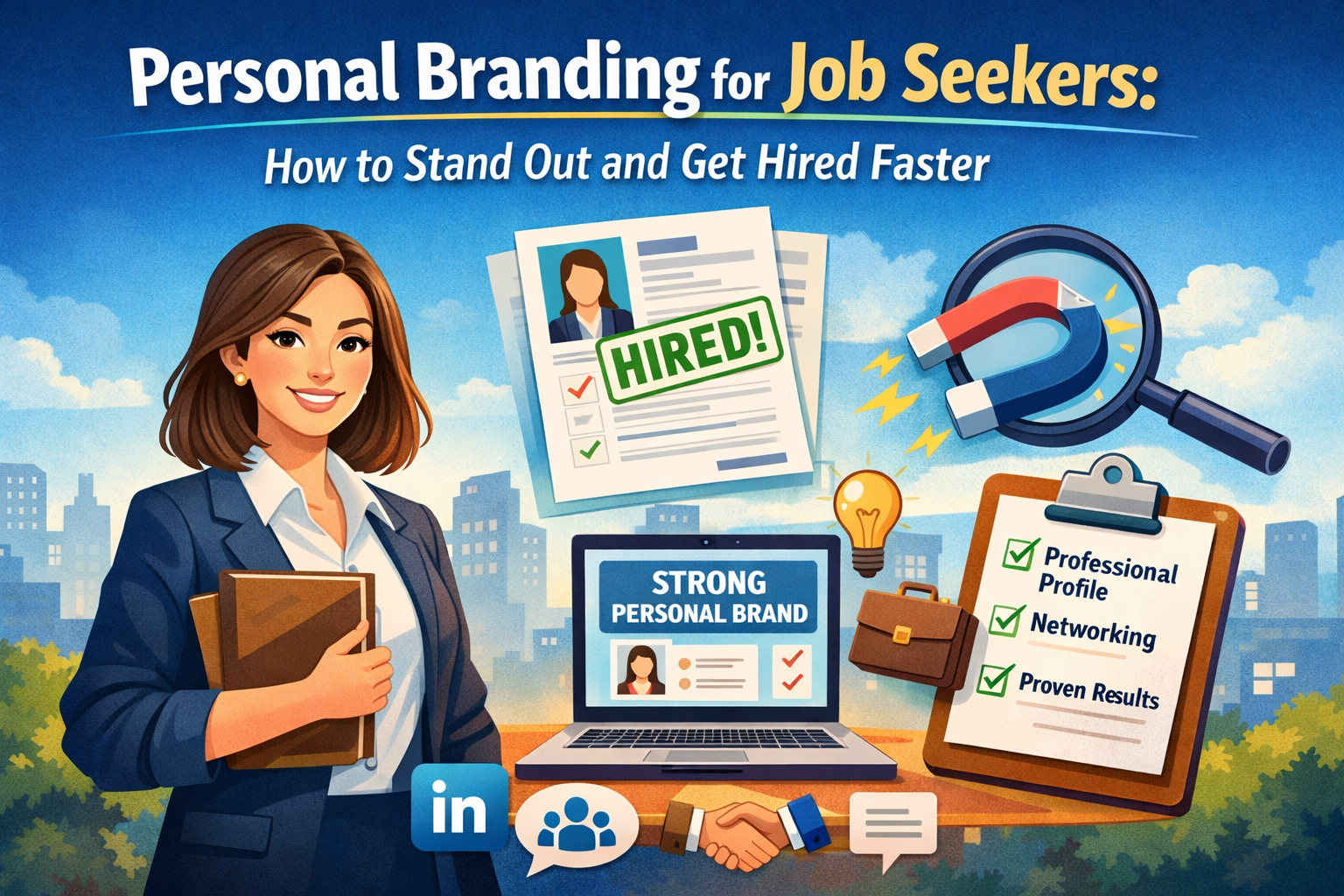
Branding First: The Job Search Mistakes That Quietly Destroy Your Market Value (And How to Fix Them)
A practical branding guide for job seekers: clear signals, real examples, and a step-by-step system to look credible—without sounding robotic.
Most people think job searching is about finding openings. In reality, it’s about branding—how you’re perceived before you ever speak to a hiring manager.
Your resume, email address, LinkedIn profile, application habits, and even the platforms you choose are not just “tools.” They are signals.
And hiring decisions are heavily influenced by signals, especially when recruiters are scanning hundreds of candidates under time pressure.
You can be qualified and still lose opportunities simply because your job search behavior makes you look careless, desperate, or low-value.
This article focuses only on branding—how job seekers unintentionally damage their personal brand, why it happens, and how to rebuild a stronger presence that attracts better roles.
Why Branding Matters More Than You Think
Branding isn’t a logo. It’s not a tagline. In hiring, branding is reputation in motion.
Your brand answers questions recruiters rarely ask out loud:
- Are you serious or just “trying your luck”?
- Are you intentional or random?
- Are you professional under pressure?
- Are you someone who adds value—or someone who needs saving?
The strongest candidates don’t apply everywhere. They position themselves clearly, consistently, and strategically. That’s why small mistakes—repeated across weeks—can quietly cut your market value.
The “Big Job Portal Trap”: When Your Platform Lowers Your Perceived Value
Why it happens
Many job seekers stick to famous job sites because it feels safe: big names, lots of listings, easy applications.
But big portals attract mass applicants. Recruiters on those platforms expect high volume and low relevance, which pushes them to skim aggressively.
Meanwhile, niche employers—boutique firms, specialized teams, non-corporate organizations—often avoid large portals to escape floods of generic applications.
How it damages your brand
If you only show up in crowded platforms, you become part of the noise. Your profile is treated like a commodity.
It’s not that those platforms are bad. The branding problem starts when they become your only identity.
How to fix it (and why it works)
Choose platforms based on who is watching, not based on popularity. Match the channel to the recruiter type:
- Corporate roles: large portals can help.
- Specialized roles: industry communities and niche boards matter more.
- Hidden roles: direct outreach and referrals create stronger signals.
shared two short case studies, and got invited to interview by a founder who said, “I like how you think.”
Same skill. Different platform. Stronger brand signal.
Outsourcing Your Job Search: When You Look Like Someone Without Ownership
Why it happens
People feel overwhelmed, so they ask a colleague, friend, or consultant to do everything—search, message employers, follow up, even negotiate.
It seems efficient, but from the employer’s side it creates doubt.
How it damages your brand
When someone else speaks for you too early, you can appear disconnected from your own direction, passive, or uncommitted.
Even if your helper is competent, the signal becomes: “This person isn’t driving their own career.”
How to fix it (and why it works)
Use others for inputs, not ownership. Ask for leads, insights, recruiter names, and interview practice—
but when it comes to contact and follow-up, you should be visible. Ownership is a high-trust signal.
Later, the candidate personally reached out with a clear pitch and relevant portfolio link. The recruiter responded within hours.
The second message showed ownership and clarity—strong branding signals.
“Spray and Pray” Applications: The Fastest Way to Look Desperate
Why it happens
One-click applications feel productive. You can apply to 30 jobs in an hour and feel like you worked hard.
But volume doesn’t build value. It often destroys it.
How it damages your brand
When your resume doesn’t match the role, the message becomes: “I don’t understand what you need.”
Also, many employers gauge interest through follow-up behavior. If you never follow up, they assume you’re applying everywhere and don’t care.
Over time, circulating as a generic applicant can quietly reduce how the market perceives your value.
How to fix it (and why it works)
Apply to fewer roles with stronger alignment. Customize only the parts that carry the most signal:
- Headline / summary
- Key skills section
- Top 2–3 achievements
- Keywords and terminology
- A short, human cover note
Recruiters aren’t hunting for “the best person in the world.” They want the best fit in this moment. Relevance is branding.
Clicking “Apply” Everywhere: When Your Brand Becomes a Lottery Ticket
Why it happens
People think, “Maybe they’ll consider me anyway.” Sometimes they will—but not through a blind click.
How it damages your brand
Applying far above your profile without context signals poor targeting and weak self-awareness.
If your name repeatedly appears in irrelevant pipelines, recruiters may ignore you even when you are relevant later.
How to fix it (and why it works)
If you’re stretching into a higher role, build credibility outside the application button:
- Connect with someone on the team
- Ask a smart question about the role’s problems
- Share a small relevant project or result
- Explain your transition clearly and briefly
This works because you replace a weak signal (“random applicant”) with a strong one (“intentional candidate with a reason”).
The Email Black Hole: Why “careers@company.com” Is Not a Strategy
Why it happens
Email feels direct and professional: write a message, attach a resume, hope for a reply.
But generic inboxes are often flooded, filtered, and triaged harshly.
How it damages your brand
If your job search relies only on generic HR emails, you risk being invisible. Your brand becomes “low effort, low connection, low visibility.”
How to fix it (and why it works)
Use email as a supporting channel, not the main engine:
- Identify the hiring manager or recruiter
- Connect via LinkedIn or a referral
- Send a short message with a specific hook (results, portfolio, or relevant insight)
- Email only when asked, or as a structured follow-up
Then she messaged a team lead directly with one relevant campaign result and a link to a case study.
The lead forwarded her internally and she got an interview within days. Same resume—better channel, better signal.
Privacy and Professionalism: When Oversharing Becomes a Brand Risk
Why it happens
Some candidates include too much personal information on resumes or coordinate job search activities using workplace devices.
They assume it’s harmless or unnoticed.
How it damages your brand
Oversharing signals poor judgment. Using work resources for job hunting can create trust issues if discovered.
Even small companies can monitor networks. This isn’t drama—just basic IT reality.
How to fix it (and why it works)
Keep your resume clean and professional:
- Name
- City/country (optional)
- Email and phone
- LinkedIn / portfolio
- No unnecessary sensitive details
Use personal devices and personal networks for your job search. It protects you and signals discretion—an underrated branding advantage.
Balance Your Online Search: Branding Needs More Than the Internet
Why it happens
Online job searching is easy, searchable, and measurable. But many roles—especially high-trust or specialized positions—are filled through
referrals, communities, internal recommendations, and direct outreach.
How it damages your brand
If your entire search exists only in applications, you become “another applicant.” Your brand never becomes a person. It becomes a PDF.
How to fix it (and why it works)
Build a simple weekly balance:
- 50% targeted applications
- 30% networking conversations
- 20% public proof of work (case studies, portfolio, thoughtful posts)
This works because branding needs repetition across channels. People trust what they see consistently.
“Trying to Look Cool” Can Make You Look Unhireable
Why it happens
Candidates underestimate how much employers notice: email addresses, usernames, public posts, and online behavior.
How it damages your brand
An email like kewldude800@ might be funny among friends, but it signals immaturity in a hiring context.
Also, your resume and job-search profile are business documents, not a platform for political battles or emotional venting.
It’s not about having no opinions—it’s about context and risk perception.
How to fix it (and why it works)
Use a clean, consistent identity:
- Firstname.lastname-style email
- Consistent naming across platforms
- A professional photo (not stiff—just clear)
- Public content that builds trust, not controversy
A simple rule: If a hiring manager sees it in 10 seconds, will it increase trust or reduce trust?
How to Build a Strong Personal Brand During Job Search (Step-by-Step)
1) Define your professional identity
Not your dream—your market position. For example:
- “Customer Support Specialist with experience handling escalations and retention.”
- “Junior Data Analyst focused on dashboarding and clean reporting.”
- “UI Designer with strong mobile-first product thinking.”
2) Match your resume to that identity
Your resume should read like evidence, not wishes. Replace tasks with outcomes:
- “Handled 60+ tickets/day with 95% satisfaction score.”
- “Reduced reporting time by 30% by automating dashboards.”
- “Improved conversion rate by redesigning checkout flow.”
3) Build proof outside the resume
One strong case study beats ten generic applications. Proof can be a portfolio, mini projects, testimonials, or short posts explaining how you solve problems.
4) Use follow-up as a brand tool
Follow-up isn’t begging. It’s professionalism. A good follow-up message shows you’re intentional, respectful of timelines, and genuinely interested.
5) Make every touchpoint consistent
Your LinkedIn headline, resume summary, and outreach message should tell the same story. Consistency creates trust—and trust creates interviews.
Closing: Your Brand Is Working Even When You’re Silent
Branding is not something you start after you get hired. It’s something you demonstrate while you’re trying to be hired.
If you only rely on big job portals, outsource your outreach, spray resumes everywhere, and hide behind generic emails,
you’re not just job searching—you’re training the market to see you as low-value.
The good news is simple: branding is fixable. Start acting like the kind of professional you want to be seen as:
intentional, clear, visible, and credible. When your job search becomes focused, your brand becomes stronger.
And when your brand becomes stronger, you stop chasing opportunities—because the right ones start responding.