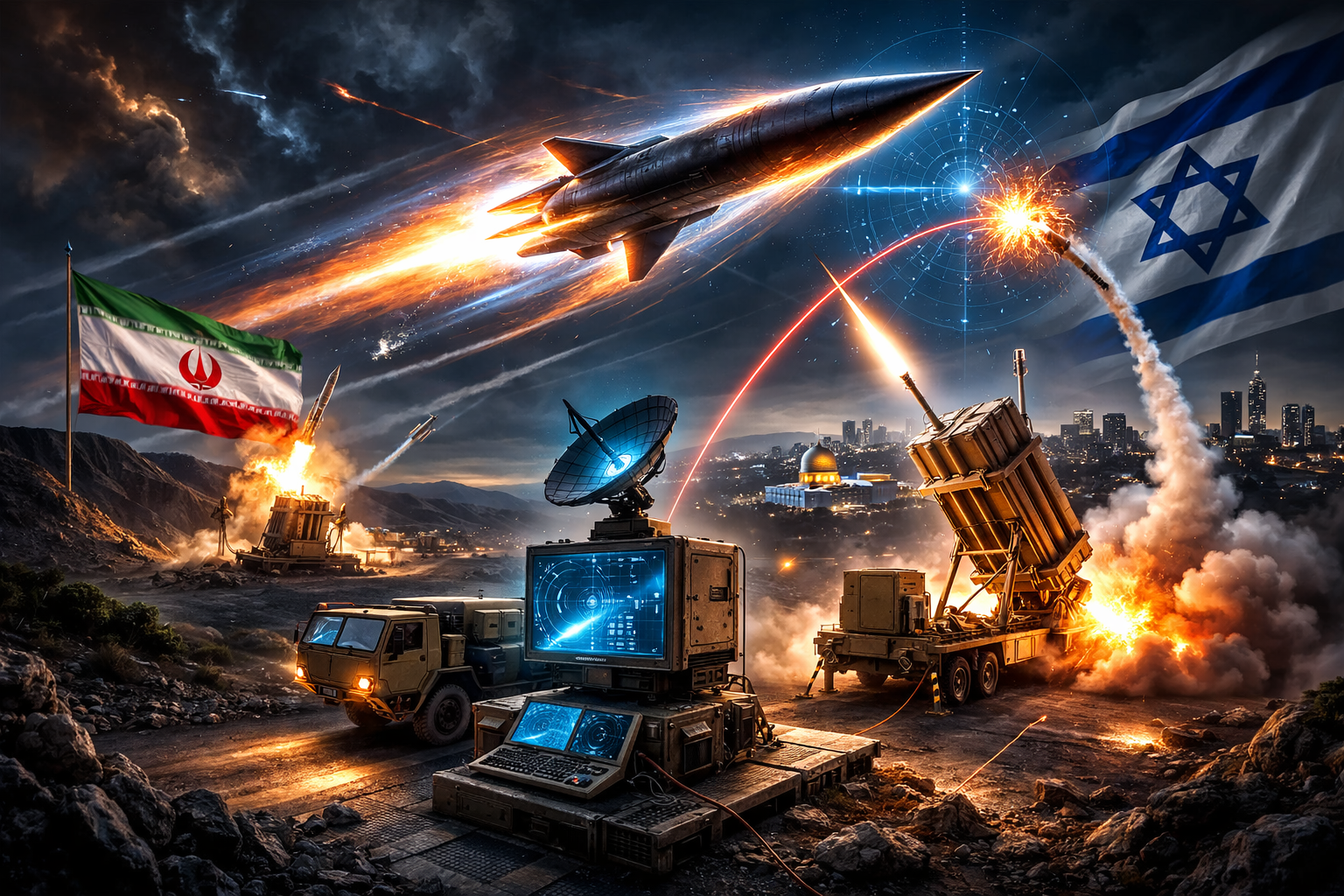
Iran’s continued technological development despite decades of international sanctions has drawn attention from analysts around the world. Among the most notable areas of advancement is its missile technology, particularly the development of hypersonic weapons. These systems, capable of traveling at extreme speeds and maneuvering during flight, represent a new generation of military technology that could challenge even the most sophisticated missile defense systems.
The topic gained renewed discussion after Indonesian analyst Mardigu Wowiek highlighted Iran’s technological resilience, arguing that the country’s experience offers an important lesson about innovation under pressure. Despite long-standing economic restrictions and limited access to global technology networks, Iran has continued to invest heavily in domestic research and development.
Building Technology Under Sanctions
For more than forty years, Iran has operated under extensive economic sanctions imposed primarily by Western countries. These sanctions have limited the country’s access to global financial systems, international trade, and advanced technology imports.
In response, Iran has adopted a strategy focused on technological self-reliance. Rather than depending heavily on foreign technology transfers, the country has developed its own capabilities across several strategic sectors, including aerospace engineering, nuclear research, and defense manufacturing.
This emphasis on domestic innovation has driven Iranian universities, military research centers, and state-supported industries to prioritize independent technological development. Over time, these efforts have produced a number of indigenous systems, particularly in missile and aerospace technologies.
Hypersonic Missiles and Their Capabilities
One of the most significant developments attributed to Iran is the advancement of hypersonic missile technology. Hypersonic weapons are defined as systems that travel at speeds exceeding Mach 5, or five times the speed of sound. Some reports suggest that Iran’s hypersonic systems could reach speeds approaching Mach 15.
At these speeds, missiles can cover vast distances in a very short period of time. More importantly, many hypersonic weapons are designed to maneuver during flight, allowing them to alter their trajectory and evade interception systems.
Unlike conventional ballistic missiles, which typically follow predictable parabolic flight paths, hypersonic glide vehicles can change direction and adjust their altitude while traveling at extremely high speeds. This combination of velocity and maneuverability makes them particularly difficult to detect, track, and intercept.
Because of these characteristics, hypersonic missiles are widely regarded as one of the most disruptive technological developments in modern military strategy.
The Challenge for Missile Defense Systems
Israel’s Iron Dome is widely known as one of the most advanced air defense systems currently in operation. The system was designed to intercept short-range rockets and artillery shells targeting populated areas.
Iron Dome operates through a network of radar systems that track incoming projectiles. Once a threat is detected, the system calculates its trajectory and determines whether it will land in a populated area. If necessary, interceptor missiles are launched to destroy the incoming projectile mid-air.
While highly effective against conventional rockets, hypersonic weapons introduce a new set of challenges for missile defense systems.
First, the extreme speed of hypersonic missiles significantly reduces the time available for detection and response. Defense systems must process radar data, calculate trajectories, and launch interceptors within seconds.
Second, hypersonic weapons can maneuver unpredictably during flight. This capability makes it far more difficult for radar systems to accurately predict the missile’s path, reducing the effectiveness of interception strategies.
Finally, some hypersonic systems operate at lower altitudes than traditional ballistic missiles. Flying closer to the Earth’s surface can limit radar detection range and further complicate interception attempts.
Together, these characteristics mean that even advanced defense systems may struggle to reliably intercept hypersonic threats.
Shifting Dynamics in Modern Warfare
The emergence of hypersonic technology has important implications for global security and military strategy. Several major powers—including the United States, Russia, and China—are actively developing their own hypersonic weapons programs.
As more countries pursue these technologies, traditional missile defense systems may need to be redesigned to counter faster and more maneuverable threats. Future air defense systems will likely require improved radar capabilities, faster interceptors, and advanced artificial intelligence to process incoming threats in real time.
For regions with ongoing geopolitical tensions, such as the Middle East, the introduction of hypersonic weapons could significantly influence strategic calculations.
Lessons from Technological Resilience
Beyond the military dimension, Iran’s technological progress also raises broader questions about national innovation strategies.
Despite facing prolonged economic restrictions, the country has continued to pursue scientific research and technological development in key sectors. Analysts argue that this persistence demonstrates the importance of long-term investment in science, engineering education, and domestic research capacity.
For many developing countries, Iran’s experience highlights the potential value of focusing on technological independence and sustained research investment.
While the geopolitical context surrounding Iran remains complex, its technological trajectory illustrates how innovation can continue even under significant external constraints.
The Future of Hypersonic Technology
Hypersonic weapons are still an emerging field, and their full impact on global defense systems remains uncertain. However, it is clear that they represent a major shift in military technology.
As nations continue to develop faster and more advanced weapon systems, defense technologies will also need to evolve. The next generation of missile defense systems may rely on new detection methods, space-based sensors, and advanced interception technologies designed specifically to counter hypersonic threats.
In this rapidly evolving technological landscape, hypersonic weapons are likely to remain a central focus of both military research and international security discussions in the years ahead.