How Translators Can Realistically Improve Their Chances of Working with Translation Agencies
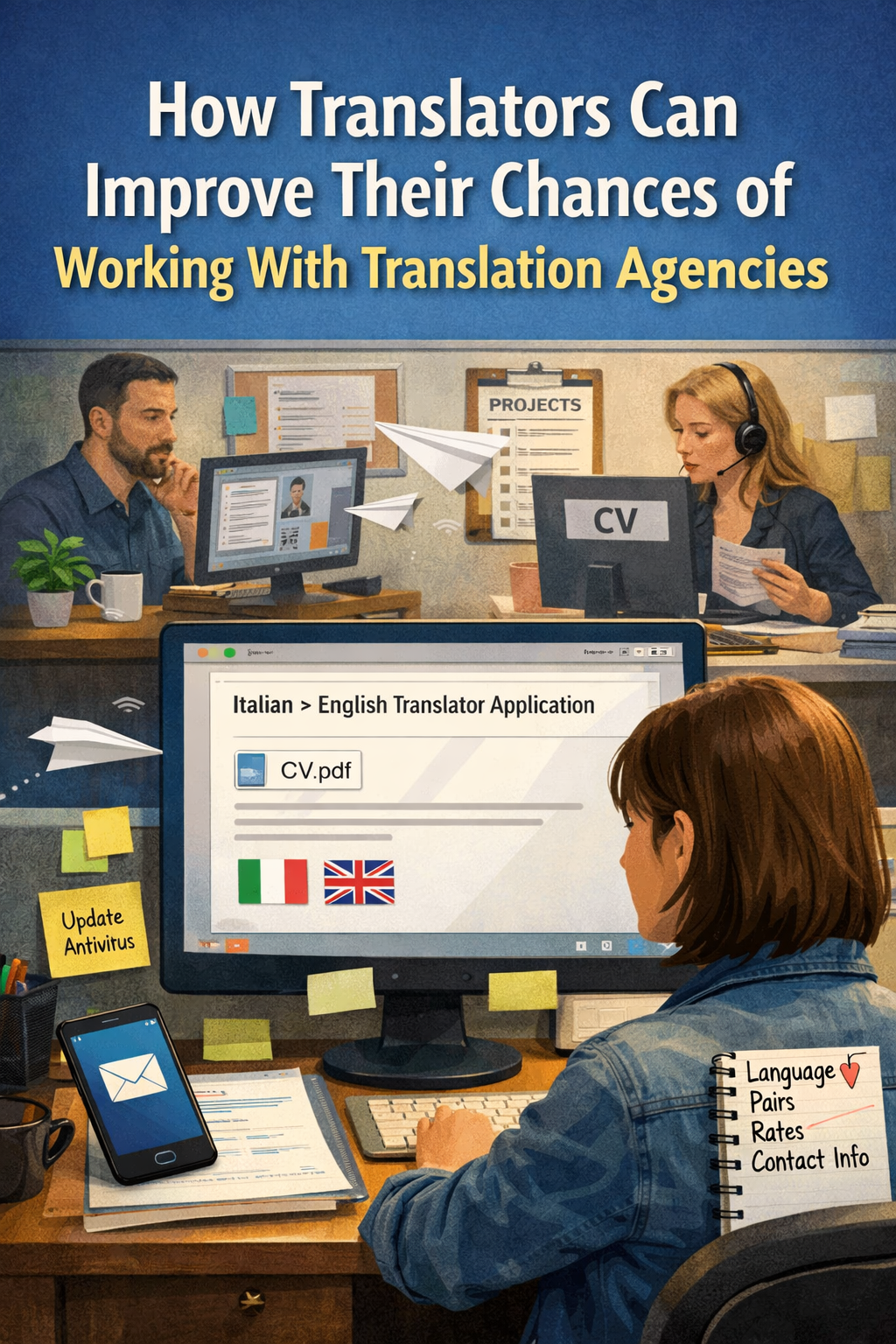
Introduction: What Really Happens Behind Agency Inboxes
I work as an Italian–English Translation Project Manager at a translation agency. Every day, my colleagues and I receive applications from freelance translators hoping to secure work. The number of enquiries has grown noticeably over the years, yet the number of projects has not increased at the same pace.
This imbalance has created intense competition. However, what many translators do not realize is that rejection often has little to do with talent, experience, or even translation quality. In practice, many applications fail for reasons that are entirely avoidable—and sometimes invisible—from the applicant’s side.
This article is based on daily, hands-on experience inside a translation agency. It does not offer generic motivation or theory. Instead, it explains how agencies actually process applications, why certain details matter more than others, and how translators can position themselves realistically—not ideally—to improve their chances of being selected.
How Translation Agencies Process Applications
Why Efficiency Comes Before Everything Else
A Translation Project Manager works under constant time pressure. Client deadlines are fixed, budgets are tight, and projects often need to be assigned quickly. When dozens of applications arrive in a short period, efficiency becomes a necessity rather than a preference.
This explains why clarity, relevance, and completeness matter so much. An application that requires extra effort to understand or verify is less likely to move forward, even if the translator is otherwise qualified.
Understanding this operational reality is the first step toward writing applications that actually work.
Keep Your Computer and Files Secure
Why Some Applications Never Reach Human Eyes
One of the most underestimated problems in translator applications is email security. Translation agencies use automated firewalls and spam filters to protect sensitive client data. If your email or CV attachment triggers those systems, it may be deleted automatically without any review.
From inside the agency, this often appears as sudden “gaps” in applications—periods where no emails arrive, followed by short bursts of many enquiries. In many cases, translators did apply, but their emails were blocked before reaching the inbox.
Practical Steps That Make a Difference
This issue is not technical complexity—it is basic digital hygiene:
- Keep your operating system updated
- Use reliable antivirus software
- Scan your files before sending them
- Avoid unusual file formats unless explicitly requested
A translator whose CV never arrives simply does not exist from the agency’s point of view.
Use the Subject Line as a Navigation Tool
How Project Managers Actually Read Emails
Project Managers do not read inboxes line by line. They scan subject lines first. A vague subject such as “Translator Application” provides no useful signal and blends into dozens of similar emails.
When time is limited, relevance must be immediately visible.
What Works and Why
If you are applying for a specific project, include the project reference or title in the subject line. This allows the PM to connect your email to a task instantly.
For general applications, clearly state your language pair(s), for example:
“Italian > English Translator – Freelance Application”
This helps your email reach the correct internal folder and ensures it can be retrieved later when a matching project appears. Emails without clear identifiers are far more likely to be forgotten than rejected.
Apply Only When You Match the Requirements
Mother Tongue Translation Is Not Optional
Agencies typically require translators to work into their mother tongue. This is not an arbitrary rule. Clients expect native-level fluency, cultural awareness, and natural writing—qualities that cannot be reliably achieved otherwise.
Despite this, agencies regularly receive applications from translators who do not meet the stated language criteria. For example, an Italian-to-English project receiving a CV from a non-native speaker of either language.
Why This Backfires Long Term
Applying for unsuitable roles signals more than a simple mismatch. It suggests that the applicant:
- Did not read the job description carefully
- Does not understand industry standards
- Applies indiscriminately
Project Managers remember patterns. Repeatedly applying for inappropriate roles can quietly damage your professional credibility.
Always Provide Complete Information
Why Missing Details Kill Shortlists
When multiple suitable applications are available, Project Managers shortlist those that require the least follow-up. Missing information—especially rates—is one of the most common reasons translators are excluded early.
Chasing missing details takes time. If alternatives already exist, most PMs will not ask.
What “Complete” Actually Means
A strong application clearly includes:
- Language pairs
- Specializations
- Rates (in the requested format)
- Availability
- Relevant experience
This is not about oversharing. It is about allowing a decision to be made without friction.
Make Yourself Easy to Reach
Why Speed Often Decides Who Gets the Job
Once a client confirms a project, assignment needs to happen fast. Availability at that exact moment matters more than theoretical interest.
If a translator cannot be reached quickly, the PM will move on. This is not personal—it is practical.
Why a Mobile Number Still Matters
Relying on email alone can cost you work. A mobile number allows instant confirmation, especially for urgent projects. Translators who are reachable are often remembered as reliable, which increases future opportunities.
Think Like a Long-Term Partner, Not a One-Time Applicant
The Shift That Changes Everything
The most successful freelancers approach agencies as collaborators, not employers. They understand that each interaction contributes to a long-term working relationship.
Clear communication, respect for instructions, and consistency matter more than clever wording or aggressive self-promotion.
Over time, these qualities lead to repeat work—often without the need to reapply.
Conclusion: Professionalism Is the Real Differentiator
From the outside, the translation market can feel unpredictable. From inside an agency, the reasons behind most decisions are surprisingly practical.
Opportunities are often lost due to avoidable issues: unclear subject lines, incomplete information, unsuitable applications, or slow responses. None of these reflect translation ability, yet all of them influence outcomes.
Translators who adapt to how agencies actually work—not how they imagine they work—stand a far better chance of building sustainable collaborations.
In a crowded market, professionalism is not optional. It is the factor that quietly separates those who are remembered from those who are overlooked.