How to Succeed in Your First Job Interview: Practical Strategies That Actually Work
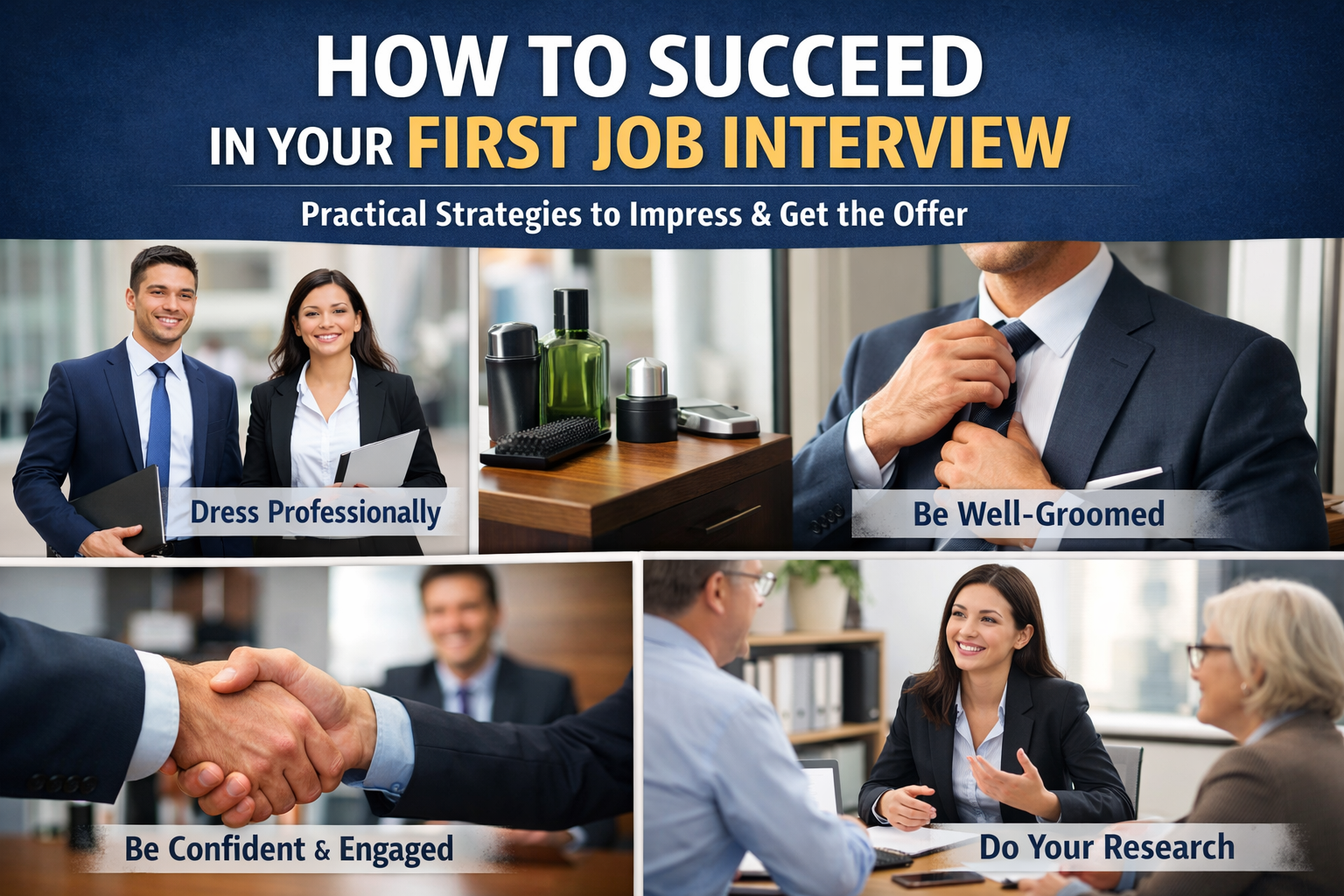
Graduating from high school or college is a major milestone. After years of studying, deadlines, and exams, you finally step into the professional world with one clear goal: landing your first real job. You polish your résumé, send out applications, and eventually receive that long-awaited call for an interview.
At this stage, many candidates assume the interview is mainly about qualifications. In reality, especially for entry-level positions, employers are often evaluating something more fundamental: your readiness to function as a professional. Skills can be trained, but attitude, awareness, and preparation are much harder to teach.
This article explains how to perform well in a job interview—not through vague motivation, but through clear reasoning, real-world examples, and practical actions that help you stand out, even if you are not the most experienced candidate.
Understanding What Employers Are Really Looking For
Before discussing interview techniques, it is important to understand why interviews exist in the first place.
An interview is not only a test of what you know. It is a preview of what it would be like to work with you. Employers ask themselves questions such as:
- Can this person represent the company professionally?
- Will they communicate clearly with coworkers and clients?
- Do they show initiative and responsibility?
- Are they genuinely interested in the role?
When you view the interview through this lens, every detail—from your appearance to how you answer questions—suddenly matters for logical reasons, not arbitrary rules.
Dressing Professionally: Why Appearance Still Matters
First Impressions Happen Before You Speak
The way you dress is the first piece of information an interviewer receives about you. Fair or not, humans make quick judgments, especially in professional settings. Dressing appropriately signals that you understand workplace norms and take the opportunity seriously.
This does not mean you need to buy an expensive suit. It means choosing clothing that aligns with the culture of the job you are applying for.
Matching Your Outfit to the Work Environment
If you are applying to a conservative office, such as an accounting firm or legal office, your clothing should reflect professionalism and restraint. Loud colors, casual footwear, or revealing clothing can unintentionally suggest poor judgment.
On the other hand, retail or creative roles may allow more flexibility. Even then, there is a clear difference between “casual professional” and “weekend casual.” Flip-flops, beachwear, or party attire almost always send the wrong message.
A useful rule is this: dress as if you are meeting someone whose opinion could significantly affect your future—because you are.
Grooming and Hygiene: A Non-Negotiable Standard
Why Employers Pay Attention to Grooming
Personal grooming is not about vanity; it is about reliability and respect. Clean hair, neat clothing, and basic hygiene suggest that you can manage daily responsibilities consistently.
From an employer’s perspective, an unkempt appearance raises concerns:
- Will this person show up prepared every day?
- Can they interact professionally with customers or clients?
- Do they pay attention to details?
A Real-World Perspective
Hiring managers often report that strong candidates are eliminated for surprisingly basic reasons. Unwashed hair, dirty fingernails, or noticeable body odor can end an interview early—not out of cruelty, but because employers cannot risk placing someone unprofessional in front of customers.
You are not just representing yourself; you are a reflection of the company.
Body Language and Communication: What You Say Without Words
The Role of Nonverbal Signals
Your body language often communicates more than your words. A firm but natural handshake, good posture, and eye contact convey confidence and attentiveness. Slouching, avoiding eye contact, or fidgeting can signal nervousness or disinterest—even if that is not your intention.
How to Stay Engaged Without Overdoing It
Confidence does not mean dominance. It means balance:
- Listen carefully to each question.
- Pause briefly before answering to organize your thoughts.
- Respond clearly and concisely.
Many candidates make the mistake of rambling because they want to appear knowledgeable. Ironically, this often has the opposite effect. Thoughtful, focused answers show maturity and self-awareness.
Preparation: The Difference Between Interested and Serious
Why Research Matters
Researching the company is one of the simplest yet most powerful ways to stand out. Every legitimate business has an online presence. Spending even 30 minutes reviewing their website shows initiative and respect for the interviewer’s time.
This preparation helps you:
- Understand the company’s mission and customers
- Tailor your answers to the role
- Ask intelligent, relevant questions
What Employers Infer From Preparation
When you arrive informed, employers see someone who:
- Takes responsibility for their own learning
- Is motivated beyond just “needing a job”
- Is more likely to adapt quickly once hired
Preparation is not about memorizing facts. It is about demonstrating intention.
Being Present and Engaged: Enthusiasm Matters More Than You Think
Passive Candidates Rarely Get Hired
Some candidates attend interviews as if they are waiting for something to happen to them. They answer questions but do not ask any. They show little emotional investment. This passivity is often interpreted as lack of interest.
Consider a real interview scenario: after explaining the duties of a position, an interviewer asks, “Does this sound like something you’d be interested in?” A response like, “I can do the job,” may be honest, but it fails to show enthusiasm.
Employers want people who want the role, not just people who can tolerate it.
Why Enthusiasm Is a Predictor of Performance
Energy in the interview often translates to energy at work. If you appear disengaged during a one-hour conversation about your own future, it raises doubts about your motivation in daily tasks.
Enthusiasm does not mean exaggeration. It means asking questions, responding thoughtfully, and showing genuine curiosity about the role and the team.
How Attitude Can Outweigh Experience
The Reality of Entry-Level Hiring
For first jobs, employers rarely expect perfection. They expect potential. Many hiring decisions come down to choosing between candidates with similar qualifications.
In those cases, employers often choose the person who:
- Communicates clearly
- Appears reliable and professional
- Shows eagerness to learn
- Makes the interview feel like a conversation, not an obligation
Standing Out for the Right Reasons
You may not be the most experienced applicant. However, by being prepared, professional, and engaged, you can become the most memorable one. That is often enough to secure an offer.
A Strong, Practical Conclusion
Job interviews are not mysterious rituals designed to intimidate new graduates. They are structured opportunities to show that you are ready to transition from student to professional.
By dressing appropriately, maintaining good grooming, using confident body language, preparing thoroughly, and staying engaged, you demonstrate something employers value deeply: professional awareness.
First impressions matter because they reflect habits, not just moments. Even if you lack experience, you can still earn the job by proving that you are motivated, attentive, and capable of representing the company well.
In the end, success in an interview is not about being flawless. It is about showing that you are serious about the opportunity and willing to grow into the role. That combination is often exactly what employers are looking for.