Guerrilla Job Search Strategies: How to Stand Out When Traditional Methods Fail
Finding a job can feel like an endurance test. You polish your résumé, tailor cover letters, apply through every major job board, follow up diligently, and network relentlessly. Week after week, you repeat the process with little to show for it. The silence is exhausting, and worse, confusing—because you’re doing everything you were told to do.
The uncomfortable truth is this: most job seekers are using the same strategies, and hiring systems are built to filter them out efficiently. Applicant Tracking Systems (ATS), overwhelmed recruiters, and generic applications create a bottleneck where capable candidates disappear unnoticed.
This is where guerrilla job search tactics come in. These are unconventional, ethical, and highly targeted approaches designed to create real human interaction—something algorithms cannot ignore. This article explores why these methods work, how to use them effectively, and when to apply them without damaging your professional reputation.
Why Traditional Job Searches Often Fail
Before diving into creative strategies, it’s important to understand why standard methods produce diminishing returns.
The Volume Problem
Online job postings attract hundreds—sometimes thousands—of applicants. Even a strong résumé becomes statistically invisible.
The Automation Barrier
Many companies rely on ATS software to screen candidates. If your résumé doesn’t match specific keywords, a human may never see it.
Passive Applications
Submitting applications is inherently passive. You wait. Employers hold the power, and your ability to influence the process is minimal.
Guerrilla tactics reverse this dynamic. They shift you from a passive applicant to an active participant who creates opportunities rather than waiting for them.
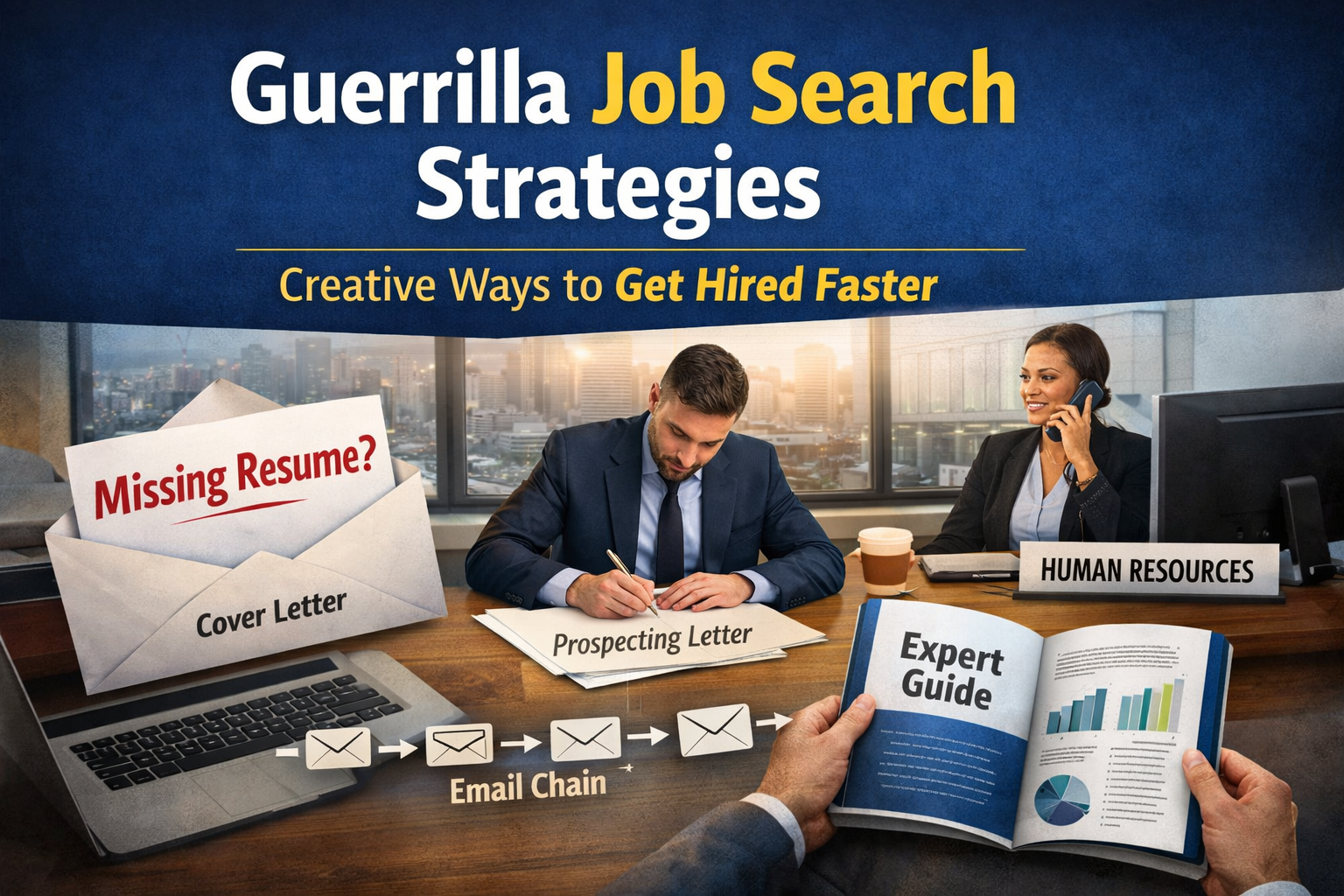
Send Half of Your Résumé: Curiosity as a Conversation Starter
How It Works
Choose a company you genuinely want to work for. Write a compelling cover letter explaining:
- Why you admire the company
- How your skills align with their goals
- That your résumé is enclosed
Then—intentionally—do not include the résumé. Leave the envelope unsealed.
Why This Works
Humans are wired to resolve inconsistencies. When a recruiter reads “please see the enclosed résumé” and finds none, their instinct is to investigate. Most will assume it was lost in transit, not intentionally omitted.
This small disruption:
- Breaks routine processing
- Triggers curiosity
- Creates a reason to contact you
Once they call, the interaction shifts from screening to conversation—your strongest advantage.
Real-World Insight
Sales professionals have used similar techniques for decades. The goal isn’t deception; it’s engagement. When done professionally, this tactic signals confidence and originality.
Write a Prospecting Letter: Turning Your Network Into Connectors
How It Works
Instead of asking contacts directly for jobs, send a concise prospecting letter:
- List 5–10 companies you are targeting
- Ask if they know anyone at any of them
- Request an introduction—not a job
When someone confirms a connection, ask for permission to:
- Send your résumé through them, or
- Contact their connection directly
Why This Works
People are far more willing to:
- Share information than provide favors
- Make introductions than recommend blindly
This approach removes pressure and respects professional boundaries.
Example in Practice
A mid-level marketing manager struggling for months used this tactic and discovered that:
- A former colleague’s spouse worked at a target company
- The résumé bypassed HR entirely
- The interview was scheduled within a week
The job was never posted publicly.
Email Chain Outreach: Expanding Reach Through Trust
How It Works
Create a list of around 20 companies you’re interested in. Draft a thoughtful email explaining:
- The roles you’re targeting
- Why these companies matter to you
- A request for referrals—not jobs
Ask recipients to:
- Let you know if they have connections
- Forward the email to 5–10 trusted contacts
Important: Do not use this method if you’re currently employed.
Why This Works
Referrals carry trust. When your email comes through a friend or colleague, it bypasses skepticism. Each forward exponentially increases reach while maintaining credibility.
Caution
This tactic can backfire if it feels spammy. Keep the tone professional, concise, and opt-in focused. One thoughtful message is more effective than mass emailing.
Distribute a Booklet: Demonstrating Expertise Before the Interview
How It Works
Create a short, high-quality booklet or guide related to your industry. Examples:
- “A Practical Guide to Reducing SaaS Churn”
- “Five Supply Chain Mistakes Costing Companies Millions”
- “How Mid-Sized Brands Can Win on Social Media Without Big Budgets”
Distribute it:
- Electronically
- Through LinkedIn groups
- In industry forums and newsletters
Why This Works
Most candidates claim expertise. Few demonstrate it proactively.
A booklet:
- Positions you as a practitioner, not an applicant
- Creates inbound interest
- Gives hiring managers something tangible to evaluate
Real-Life Example
A data analyst shared a free PDF analyzing public retail data trends. It circulated within an industry Slack group and resulted in three interview invitations—none of which required formal applications.
Call Human Resources: The Direct Approach Most People Avoid
How It Works
Call the HR department—not to ask for a job—but to ask:
“Which external recruiting agencies do you typically work with?”
If questioned, explain that:
- You understand they’re not hiring your role currently
- You’re seeking a recruiter recommendation
Why This Works
HR departments:
- Pay significant fees to recruiters
- Appreciate candidates who respect process
- Remember proactive professionals
In some cases, they may:
- Suggest an internal conversation
- Ask for your résumé
- Offer an informational interview
Always send a thank-you note afterward. This reinforces professionalism and leaves a positive impression.
Five Additional Creative Job Search Tactics
1. Reverse Job Posting
Write a short job description for yourself and publish it on LinkedIn:
“Company Seeking: Strategic Operations Leader with 8 Years of Scaling Experience”
This reframes you as a solution, not a seeker.
2. Solve a Real Company Problem
Identify a challenge the company faces and send:
- A brief analysis
- A proposed solution
This shows initiative and business thinking—qualities rarely visible in résumés.
3. Attend Events Without Résumés
Networking works best when it’s not transactional. Focus on conversations, not pitching. Follow up later with context.
4. Create a Personal Website With Case Studies
A simple site showcasing real results can outperform even the best résumé, especially in creative and technical fields.
5. Ask for Informational Interviews
People love sharing expertise. Many informational interviews quietly turn into job leads when timing aligns.
When Guerrilla Tactics Work Best—and When They Don’t
Best Situations
- Competitive industries
- Mid-level to senior roles
- Relationship-driven fields
- When applications go unanswered
Situations to Avoid
- Highly regulated roles with strict hiring protocols
- When tactics could appear deceptive
- If you cannot execute professionally
The key is intentionality, not shock value.
The Psychology Behind Guerrilla Job Searching
These strategies work because they:
- Interrupt patterns
- Create human connection
- Shift perception from “applicant” to “problem-solver”
Hiring is not purely logical. It’s influenced by trust, familiarity, and perceived value. Guerrilla tactics speak directly to these factors.
A Strong, Practical Conclusion
Job searching is not about trying harder—it’s about trying differently. When traditional channels fail, it’s often not a reflection of your ability, but of a broken system optimized for efficiency, not talent.
Guerrilla job search strategies are not shortcuts. They require thought, preparation, and courage. But when used ethically and intelligently, they can:
- Open hidden opportunities
- Create genuine conversations
- Restore a sense of control in an exhausting process
If you’re willing to step outside the script and engage the market as a human—not just a résumé—you dramatically improve your odds. The goal isn’t to be louder. It’s to be more memorable, more relevant, and more real.
That’s how jobs are truly found.