
Drone Attack on Saudi Aramco: Impact on Global Oil Prices and Energy Markets
 Rifqi Arafat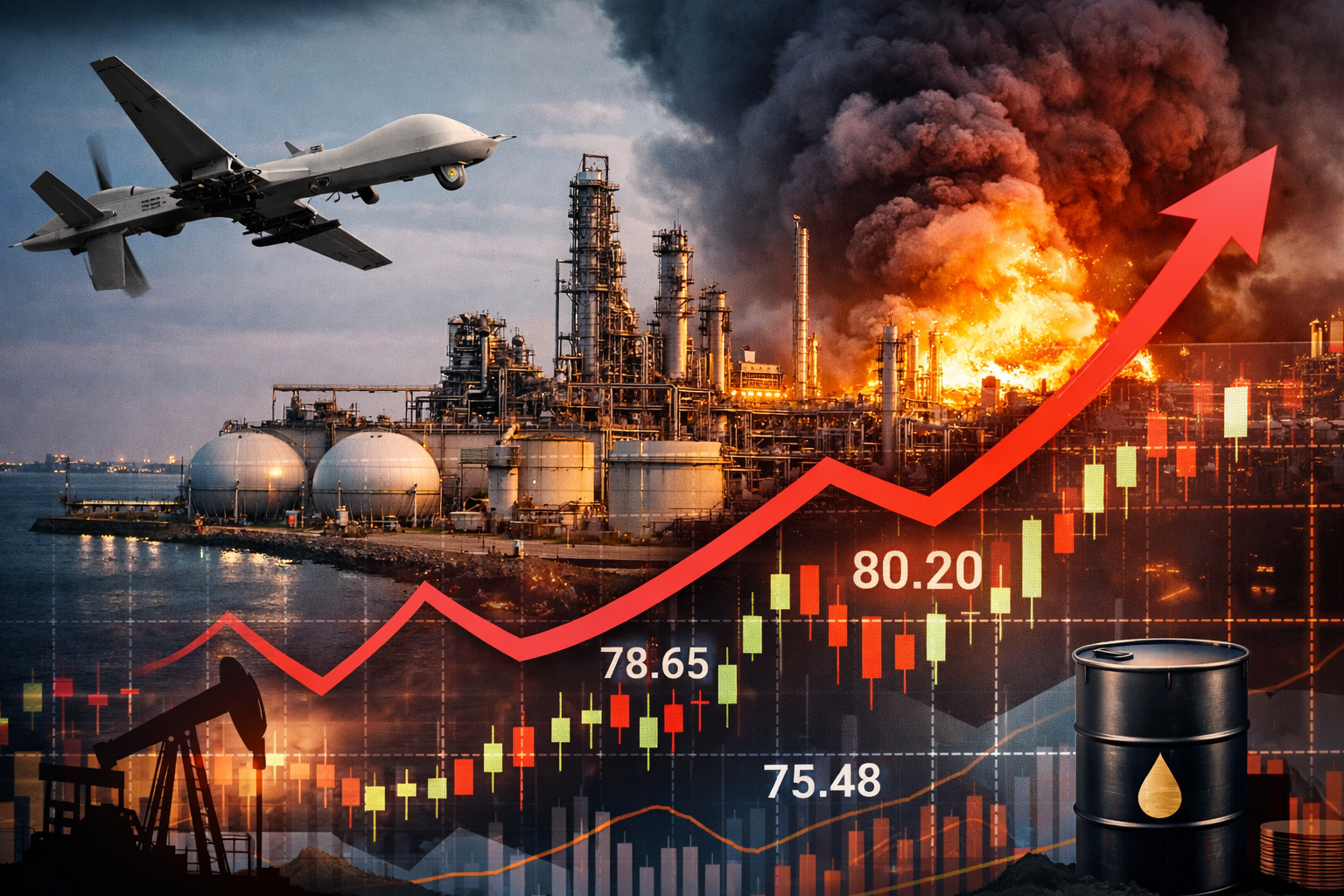
A drone attack targeting Saudi Aramco’s Ras Tanura refinery has reignited concerns about the vulnerability of global energy infrastructure and its potential impact on international oil markets. The incident highlights how geopolitical tensions in the Middle East can quickly influence oil prices and market stability.
Saudi Aramco, the world’s largest oil producer, temporarily halted operations at the Ras Tanura refinery following the attack. The precautionary shutdown triggered immediate reactions from energy traders and investors who closely monitor any disruption to Saudi Arabia’s oil infrastructure.
Although initial reports indicated limited damage, the attack underscores the strategic importance of the facility and the fragile balance of global oil supply.
Why Ras Tanura Is Critical to Global Oil Supply
The Ras Tanura refinery is one of Saudi Arabia’s most important energy assets. With a refining capacity of roughly 550,000 barrels per day, the facility plays a key role in processing crude oil and exporting petroleum products to international markets.
Located along the Persian Gulf, Ras Tanura serves as a major hub connecting Saudi oil production fields with global shipping routes. Any disruption at the facility—whether temporary or prolonged—can influence oil supply expectations and trigger market volatility.
Saudi Arabia is responsible for approximately 10% of the world’s oil production, meaning disruptions to its infrastructure often ripple across global commodity markets. Even small operational interruptions can affect supply forecasts and push traders to adjust pricing expectations.
Immediate Impact on Global Oil Prices
Global oil prices reacted quickly after news of the drone attack spread across financial markets. Brent crude oil prices climbed sharply, approaching $80 per barrel, as traders assessed the potential risks to Middle Eastern oil production and exports.
Energy analysts note that oil markets often react not only to actual supply disruptions but also to perceived geopolitical risk. When critical infrastructure such as refineries, pipelines, or export terminals becomes a target, traders typically factor in a “risk premium” that pushes prices higher.
This reaction reflects the market’s sensitivity to geopolitical instability, especially in regions responsible for a significant share of global oil output.
Geopolitical Tensions in the Middle East
The drone strike comes amid heightened tensions in the Middle East involving regional and international powers. Conflicts in the region increasingly involve strategic infrastructure, including oil refineries, energy pipelines, and export terminals.
Energy infrastructure has become a symbolic and strategic target in modern geopolitical conflicts. Attacks on these facilities not only disrupt operations but also create uncertainty that reverberates through global markets.
Another major concern is the Strait of Hormuz, a critical maritime route where nearly 20% of the world’s oil supply passes each day. Any escalation affecting shipping in this narrow waterway could significantly disrupt global energy flows and trigger sharp price increases.
Potential Economic Impact on the Global Economy
Rising oil prices often have broader economic consequences. When crude prices increase, transportation, manufacturing, and logistics costs typically rise as well. This can lead to higher consumer prices and inflationary pressures in many countries.
For oil-importing nations, higher energy costs can slow economic growth by increasing production expenses and reducing consumer purchasing power. Conversely, oil-producing countries may benefit from higher export revenues, at least in the short term.
However, prolonged geopolitical instability can create uncertainty for global markets. Investors and policymakers may become more cautious, potentially affecting financial markets and long-term investment decisions.
Energy Security and Long-Term Implications
The attack on Saudi Aramco’s refinery highlights the growing importance of energy security in a world increasingly shaped by geopolitical tensions.
Governments and energy companies may need to invest more heavily in protecting critical infrastructure from emerging threats such as drone warfare and cyberattacks. At the same time, many countries are accelerating efforts to diversify energy sources and reduce dependence on oil imports.
The incident may also reinforce the global transition toward renewable energy, as policymakers seek to minimize exposure to geopolitical risks associated with fossil fuel supply chains.
Outlook for Global Oil Markets
While the immediate disruption to Saudi Aramco’s operations appears limited, the broader implications for oil markets remain significant. Traders will continue monitoring developments in the Middle East, particularly any signs of escalation that could threaten energy infrastructure or shipping routes.
If tensions persist, oil prices may remain volatile as markets factor in geopolitical risk. However, if stability returns and production continues uninterrupted, prices could gradually stabilize.
For now, the drone attack on Ras Tanura serves as a reminder that the global oil market remains deeply interconnected with geopolitical developments in the Middle East.