
Free Sample Resumes: How to Use Templates Strategically in a Competitive Job Market
 Rifqi Arafat
Free Sample Resumes in a Competitive Job Market: How to Use Them Without Losing Your Identity
The Job Market Has Changed—And So Must the Resume
The modern job market is no longer defined by scarcity of opportunity, but by saturation of candidates. For almost every open position, there are dozens—sometimes hundreds—of applicants with similar qualifications. Degrees overlap. Certifications repeat. Experience levels blur. In this environment, job seekers are not only evaluated on what they know, but on how clearly and convincingly they communicate it.
This shift has quietly transformed the resume into something closer to a marketing document than a personal record. A resume now functions as a first impression, a positioning tool, and often the only voice a candidate has before an interview. This reality explains why free sample resumes have become so widely used—and why they matter.
However, using them effectively requires more than downloading a template. It requires understanding why they work, how to adapt them, and when they stop being helpful.
Why Resume Presentation Carries More Weight Than Qualifications Alone
Recruiters Read Fast, Not Deep
Recruiters rarely read resumes line by line during the first screening. Most scan. They look for structure, clarity, and relevance before they look for depth. If the resume feels difficult to process—too dense, poorly organized, or visually chaotic—it is often skipped, regardless of how strong the candidate may be.
Free sample resumes help job seekers understand what “readable” looks like in practice. They demonstrate spacing, hierarchy, and flow—elements that directly influence whether a resume survives the first few seconds of review.
The Invisible Gatekeeper: Applicant Tracking Systems
Another layer of complexity comes from Applicant Tracking Systems (ATS). These systems filter resumes based on formatting, keywords, and structural consistency. Many qualified candidates are rejected automatically due to formatting issues rather than lack of competence.
Well-designed sample resumes often reflect ATS-friendly structures. Studying them helps candidates avoid hidden technical mistakes, such as excessive graphics, improper headings, or unreadable text blocks.
Why the Internet Became the Primary Source of Resume Guidance
Scale, Speed, and Relevance
The internet offers what traditional career guides cannot: scale and immediacy. Job roles evolve quickly, especially in technology, digital marketing, and remote work. Online resume platforms update faster than textbooks or printed manuals.
As a result, job seekers can access:
- Profession-specific resume examples
- Updated formatting trends
- Industry language that reflects current hiring practices
This relevance is one reason online sample resumes are often more practical than generic career advice.
Templates as Learning Tools, Not Final Products
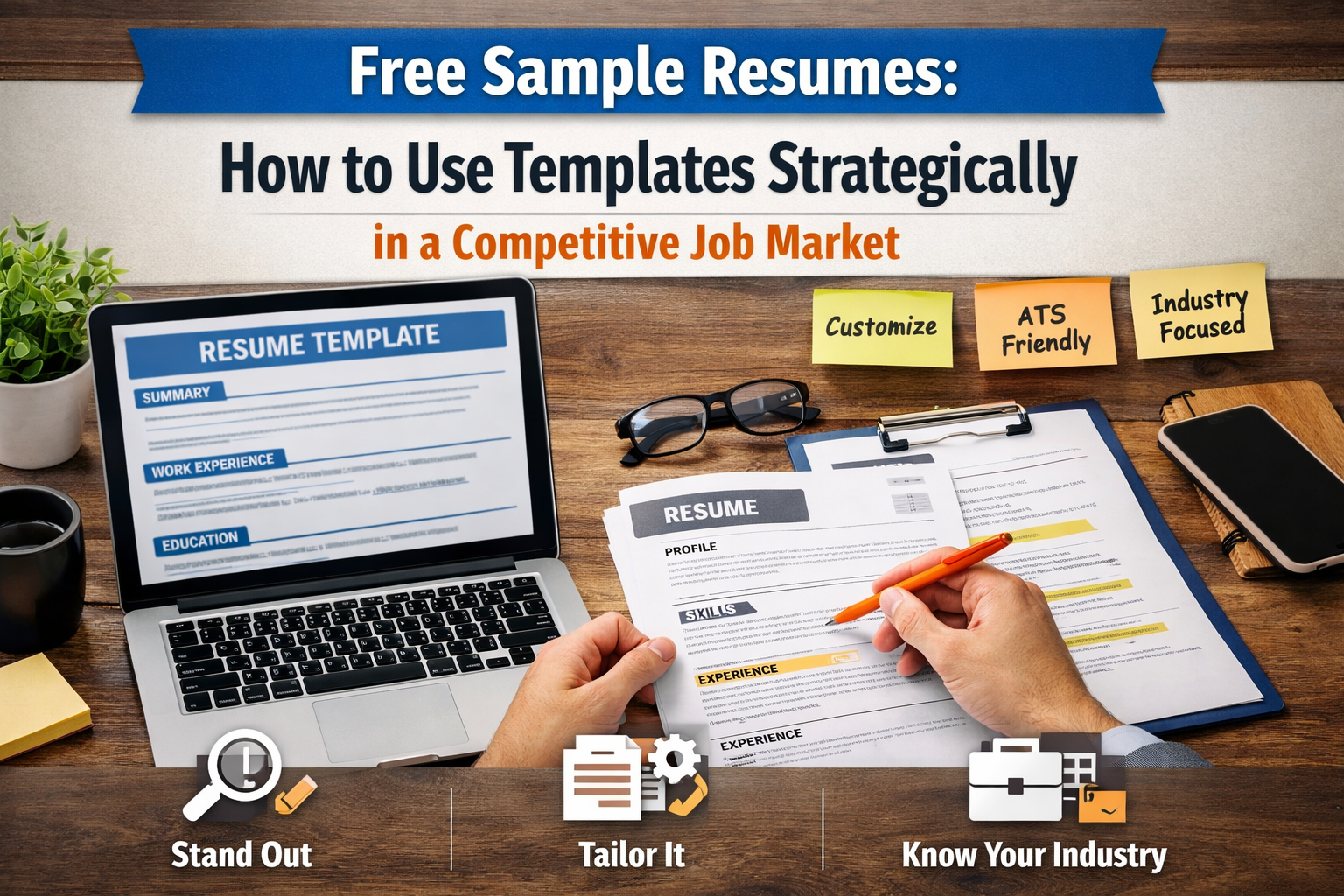
The most useful resume templates are not meant to be used verbatim. Their real value lies in showing how information is prioritized. They answer questions many job seekers struggle with, such as:
- Where should achievements go?
- How much detail is too much?
- What belongs on the first page?
When used as references rather than replacements, templates accelerate learning without diluting originality.
The Role of University Placement Cells: Helpful but Limited
Structured Guidance for Early Careers
University placement cells often provide free sample resumes aimed at students and fresh graduates. These resumes are particularly helpful for individuals with limited professional experience. They demonstrate how academic projects, internships, and extracurricular activities can be framed as transferable skills.
For someone entering the workforce for the first time, this guidance reduces uncertainty and lowers the barrier to entry.
Where Institutional Samples Fall Short
That said, placement-cell resumes are often standardized. They may not reflect the diversity of real-world hiring practices across regions and industries. As careers progress, relying solely on institutional templates can result in resumes that feel outdated or overly generic.
This is where broader online resources become essential.
Industry-Specific Resumes: Why Context Matters More Than Format
Different Industries Read Resumes Differently
A resume is not interpreted in a vacuum. Recruiters bring industry expectations with them. For example:
- Airlines prioritize safety training, certifications, and customer-facing experience
- Teaching roles focus on methodology, curriculum design, and student outcomes
- Technology roles emphasize tools, systems, and measurable results
Free sample resumes highlight these differences by adjusting language, structure, and emphasis. This teaches job seekers an important lesson: relevance is contextual, not universal.
How Industry Samples Improve Decision-Making
By comparing resumes across industries, candidates learn why certain information matters more in one field than another. This understanding allows them to make informed decisions rather than blindly following trends.
Free Sample Resumes Are Not Just for Beginners
Experienced Professionals Face a Different Problem
As careers advance, resumes tend to grow longer and less focused. Experienced professionals often struggle to condense years of work into a coherent narrative. The problem is not lack of content, but lack of structure.
Sample resumes designed for senior professionals demonstrate how to:
- Emphasize outcomes over responsibilities
- Show leadership without listing every task
- Communicate progression clearly
This guidance is especially valuable during career transitions or leadership applications.
A Practical Example
Consider a manager with fifteen years of experience across similar roles. A traditional resume might list each position separately, repeating similar responsibilities. A well-structured sample resume would instead consolidate experience and highlight impact—saving space while increasing clarity.
Cover Letters: Still Relevant When Used Correctly
Why They Haven’t Disappeared
Despite automation, cover letters remain influential in roles that value communication, leadership, or motivation. A resume lists facts; a cover letter explains intent.
Free sample cover letters help job seekers understand how to:
- Connect experience to company needs
- Show reasoning behind career choices
- Add personality without informality
Avoiding the Common Trap
The goal is not enthusiasm for its own sake. Overly motivational language without substance often backfires. The best cover letters—like the best resumes—balance clarity with relevance.
Paid Resume Services vs. Free Samples: A Realistic Comparison
When Customization Makes Sense
Paid resume services offer value in specific situations: executive roles, highly competitive markets, or international applications. They can help with strategic positioning and advanced keyword optimization.
Why Free Resources Are Often Enough
For most job seekers, free sample resumes provide sufficient guidance. The determining factor is not the price of the template, but the quality of customization applied to it.
How to Use Free Sample Resumes the Right Way
Extract Principles, Not Sentences
The most effective approach is analytical. Instead of copying content, examine:
- Section order
- Bullet length
- Language tone
Then apply those principles to your own experience.
Update with Intent
A resume should evolve as your career evolves. Free samples can inspire restructuring when responsibilities grow or direction changes.
The Risk of Over-Reliance
Free sample resumes are guides, not guarantees. Including every section simply because it appears in a template can weaken focus. Judgment matters.
The strongest resumes are selective. They include only what supports the candidate’s current goal.
A More Useful Way to Think About Resumes
Rather than viewing resumes as static documents, it is more helpful to see them as living summaries of professional value. Free sample resumes offer formats, but meaning comes from alignment—between experience, role, and industry expectations.
When resumes reflect this alignment, they stop feeling generic and start feeling intentional.
Conclusion: Use Free Samples as Tools, Not Crutches
Free sample resumes exist because modern job searching is complex. They lower the learning curve and reveal expectations that are rarely stated outright.
But their true value lies in informed use. Candidates who understand why certain structures work—and how to adapt them—gain more than a better resume. They gain clarity about their own professional identity.
In a crowded job market, that clarity is what ultimately sets one candidate apart from another.