
How to Write an Accountant Resume That Gets You Hired | Complete Guide
 Rifqi Arafat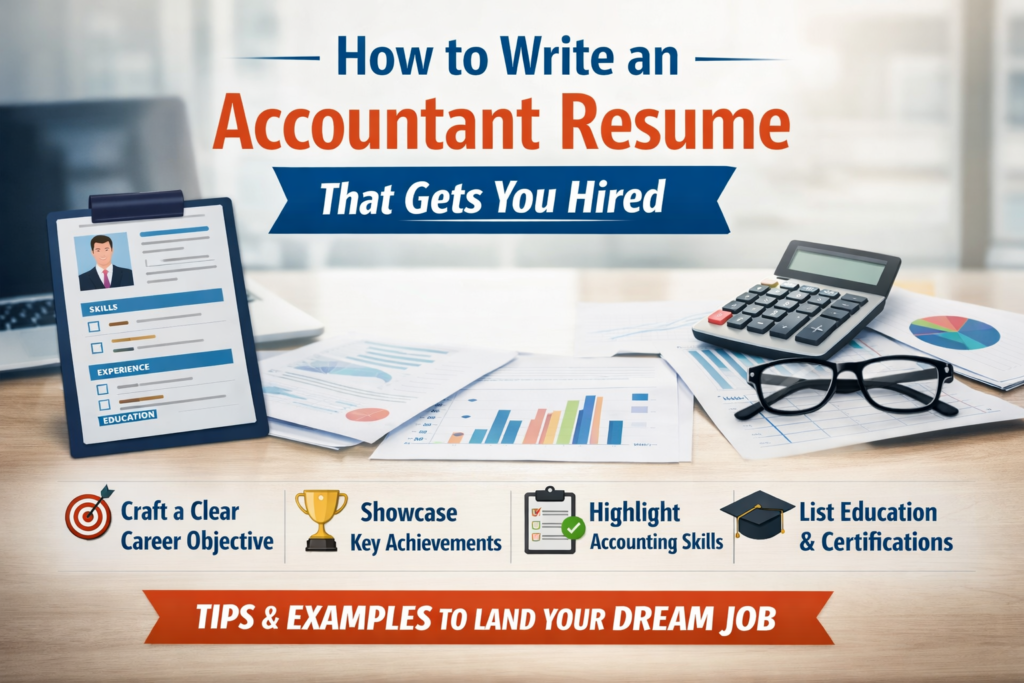
How to Write an Effective Accountant Resume That Attracts Employers
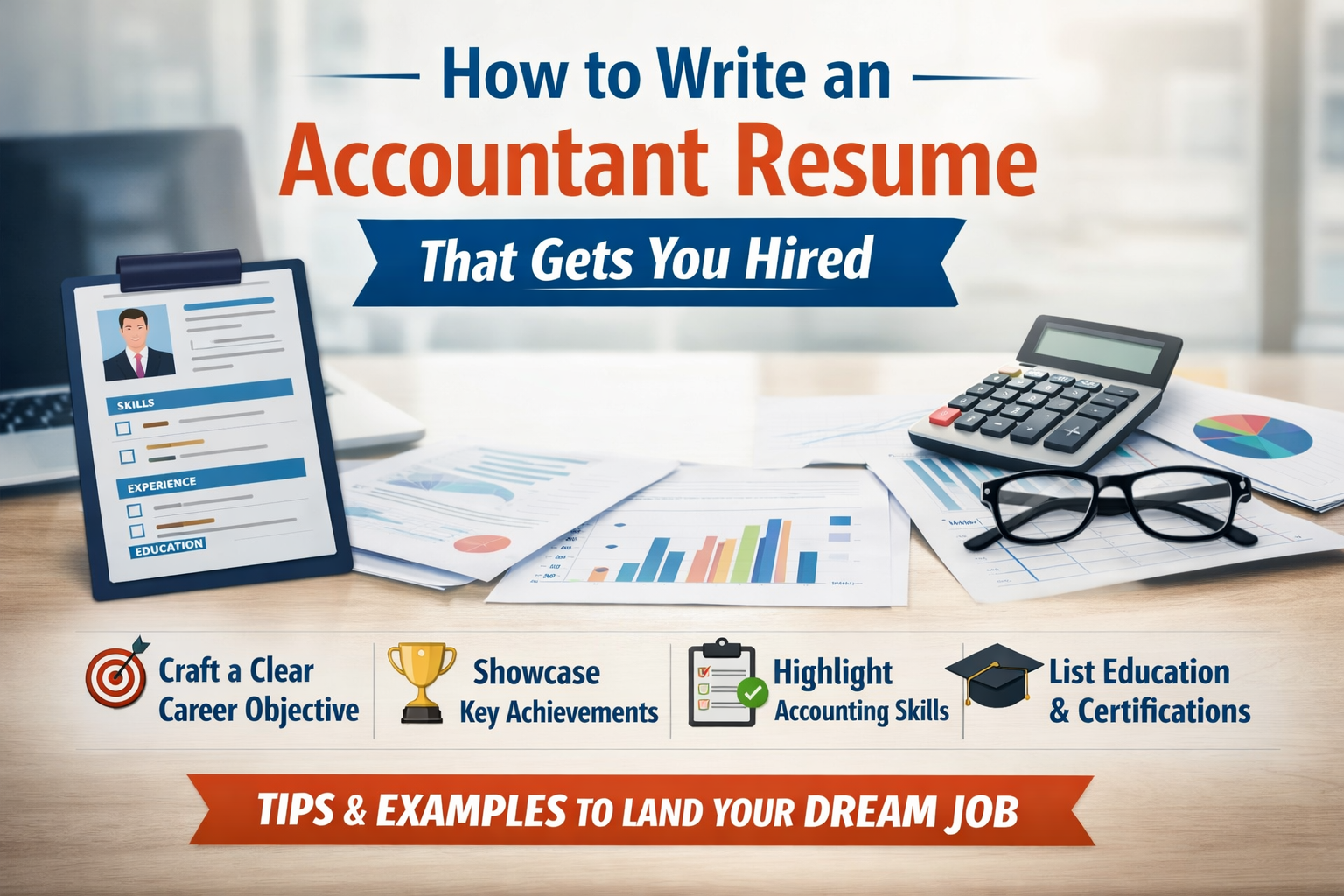
An accountant’s resume is far more than a simple document listing past jobs and educational background. It is a strategic marketing tool that presents your professional value, showcases your expertise, and convinces potential employers that you are the right candidate for the position. In a competitive job market, a well-written accountant resume can be the deciding factor between receiving an interview invitation or being overlooked.
This article provides a comprehensive guide to creating a strong accountant resume. It explains what employers look for, how to structure your resume effectively, and how to present your accounting skills, experience, and achievements in a professional and compelling way.
Understanding the Purpose of an Accountant Resume
The primary goal of an accountant resume is to communicate your qualifications clearly and efficiently. Hiring managers often review dozens, sometimes hundreds, of resumes for a single position. Because of this, your resume must quickly demonstrate your value, professionalism, and suitability for the role.
A strong accountant resume should:
- Clearly present your professional identity
- Highlight relevant accounting experience and skills
- Demonstrate measurable achievements and results
- Show career direction and motivation
- Use industry-specific terminology and action verbs
When written correctly, your resume becomes a powerful tool that reflects your competence, attention to detail, and analytical mindset—qualities every employer expects from an accountant.
Essential Personal Information to Include
Every professional resume should begin with accurate and up-to-date personal information. This allows employers to contact you easily and establishes a professional first impression.
Your resume should include:
- Full name (as it appears on official documents)
- Permanent or current address (city and country are usually sufficient)
- Active phone number
- Professional email address
Make sure your email address is formal and appropriate. Avoid using casual or unprofessional email names, as this can negatively affect your credibility.
Writing a Clear Career Objective
One of the most important sections of an accountant resume is the career or job objective. This section gives employers a quick overview of your professional goals and career direction.
A well-written career objective should:
- Be concise and specific
- Clearly state the role you are seeking
- Highlight your key strengths and expertise
- Align with the employer’s needs
For example, instead of writing a vague objective, focus on how your accounting skills can contribute to the organization’s financial accuracy, efficiency, or growth. This helps employers immediately understand your value.
Listing Professional Experience Effectively
Your work experience section is the core of your resume. Employers are particularly interested in your practical accounting experience and how you have applied your skills in real-world situations.
When listing your professional experience:
- Include the name of each employer
- Mention your job title clearly
- State your employment period
- Organize experience in reverse chronological order
If an employer is not widely known, briefly describe the organization, including the industry and core activities. This context helps hiring managers understand the scope and relevance of your experience.
Highlighting Key Achievements and Results
Rather than listing routine duties, focus on your accomplishments. Employers want to see how you made a positive impact in your previous roles.
Each role should include:
- Two to ten bullet points describing key achievements
- Results expressed in measurable terms where possible
- Contributions related to accounting, finance, or operations
For example, you can mention how you improved reporting accuracy, reduced financial discrepancies, enhanced compliance, or supported audits successfully. This approach demonstrates effectiveness rather than simply responsibility.
Showcasing Accounting Skills
Accounting skills are a critical part of your resume. This section should clearly outline both your technical and professional competencies.
Relevant accounting skills may include:
- Financial reporting and analysis
- General ledger management
- Accounts payable and receivable
- Budget preparation and forecasting
- Tax preparation and compliance
- Internal controls and auditing
- Cost accounting and variance analysis
- Financial software proficiency
Use skill headings and accounting-related keywords that employers and applicant tracking systems recognize. This improves visibility and ensures your resume passes automated screening tools.
Using Industry-Specific Keywords and Action Verbs
Modern recruitment processes often rely on automated systems to scan resumes. Using appropriate accounting keywords increases your chances of being shortlisted.
Incorporate action-oriented phrases such as:
- Managed accounts receivable processes
- Supervised accounting and administrative staff
- Prepared balance sheets and financial statements
- Conducted financial audits and reconciliations
- Improved billing and collections procedures
These phrases demonstrate leadership, responsibility, and expertise while keeping the resume professional and impactful.
Demonstrating Cost Reduction and Efficiency Improvements
Employers highly value accountants who contribute to cost savings and operational efficiency. Highlighting these achievements shows your ability to add tangible value to the organization.
Examples of valuable contributions include:
- Reducing operational costs through improved budgeting
- Identifying financial inefficiencies and implementing solutions
- Streamlining accounting processes
- Improving productivity within the finance department
Whenever possible, quantify these results. Numbers help employers clearly understand the impact of your work.
Education and Professional Qualifications
Your education section should clearly present your academic background and professional credentials. This information reassures employers of your technical foundation and compliance with industry standards.
Include:
- Degree(s) obtained and major subjects
- University or institution names
- Graduation dates
- Locations of institutions
- Relevant certifications or licenses
List your education in reverse chronological order, starting with the most recent qualification. Professional certifications related to accounting or finance should be prominently displayed, as they enhance credibility.
Emphasizing Professional Growth and Career Goals
Beyond past achievements, employers want to know where you are heading professionally. Briefly mentioning your career goals shows ambition, motivation, and alignment with the organization’s objectives.
Express your interest in the specific position you are applying for and explain how it fits into your long-term professional development. This demonstrates commitment rather than a short-term job search mentality.
Writing Style and Resume Optimization
An effective accountant resume should be:
- Clear and concise
- Professionally written
- Free from grammatical errors
- Optimized for readability
Use management-oriented language and active voice to strengthen your statements. Avoid unnecessary jargon, but ensure your terminology reflects accounting expertise.
Carefully proofread your resume to eliminate spelling or grammar mistakes. Even small errors can negatively affect your professional image, especially in a field that values accuracy.
Final Thoughts
A well-crafted accountant resume plays a crucial role in career advancement. It not only summarizes your professional background but also tells a story of competence, responsibility, and measurable success.
By focusing on clear structure, relevant achievements, accounting-specific skills, and professional language, you can create a resume that stands out to employers and meets modern hiring standards. Whether you are an entry-level accountant or an experienced professional, investing time in developing a high-quality resume will significantly improve your job prospects.
A strong resume does not simply list qualifications—it communicates value. When done correctly, it opens doors to new opportunities and long-term career growth in the accounting profession.